_edited.png)
10 Practical Uses for Magnets in Everyday Life
- Mar 11
- 3 min read
Magnets are everywhere in modern life, from simple household tools to advanced industrial machinery. While many people think of magnets only as fridge decorations, they are actually used in a wide range of practical applications that make everyday tasks easier and more efficient.
Whether in workshops, homes, offices, or manufacturing environments, magnets provide convenient solutions for organising, lifting, separating, and securing metal objects.
In this article, we explore ten practical ways magnets are used in everyday life.
1. Organising Tools in Workshops
Magnets are widely used in workshops and garages to organise tools.

Magnetic tool holders allow screwdrivers, spanners, pliers, and other metal tools to be stored neatly on walls or workbenches.
This keeps tools easily accessible while reducing clutter and improving efficiency.
Magnetic tool strips are particularly useful in:
Garages
Engineering workshops
DIY workspaces
Industrial environments
2. Refrigerator Magnets for Home Organisation
One of the most common uses for magnets is in the kitchen.
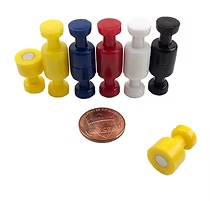
Refrigerator magnets help hold items such as shopping lists, reminders, photos, and children's artwork.
They provide a simple and convenient way to keep important notes visible.
3. Magnetic Pickup Tools
Magnetic pickup tools are extremely useful for retrieving small metal objects that are difficult to reach.
These tools are commonly used to pick up:
Screws
Nails
Bolts
Metal shavings
Mechanics and technicians often use magnetic pickup tools when working in tight spaces such as engine compartments.
4. Magnetic Sweeper Tools
Magnetic sweepers are used to collect metal debris from floors, driveways, and workshop areas.
They are especially helpful for removing:
Nails
Screws
Metal shavings
Small steel fragments
This helps improve workplace safety by preventing puncture injuries or tyre damage.
5. Magnet Fishing
Magnet fishing is a growing hobby where people use strong magnets attached to ropes to retrieve metal objects from waterways.
Magnet fishers often recover items such as:
Tools
Coins
Bicycle parts
Scrap metal
In addition to the excitement of discovery, magnet fishing can help remove metal waste from rivers and lakes.
6. Industrial Magnetic Separation
Magnets are widely used in manufacturing and recycling to separate ferrous metals from other materials.
Magnetic separators are used in industries such as:
Recycling
Mining
Food processing
Waste management
This technology helps remove unwanted metal contamination and improves product quality.
7. Electric Motors and Generators
Magnets play a crucial role in electric motors and generators. Permanent magnets interact with electric currents to create motion or generate electricity.
They are used in:
Electric vehicles
Power tools
Household appliances
Industrial machinery
Rare-earth magnets such as neodymium magnets are commonly used in high-performance motors.
8. Magnetic Door Closures

Magnets are commonly used in cabinet doors and cupboards to keep them securely
closed.
Magnetic catches provide a simple and reliable mechanism that prevents doors from opening unintentionally.
9. Magnetic Phone Mounts
Magnetic mounts allow smartphones to be securely attached to car dashboards or other surfaces.
These mounts make it easy to view navigation apps or make hands-free calls while driving.
10. Educational and Scientific Tools
Magnets are also widely used in education to demonstrate principles of physics such as magnetic fields and electromagnetism.
They are commonly used in classrooms and science experiments to help students understand how magnetic forces work.
Why Magnets Are So Useful
Magnets are popular because they offer several key advantages:
They require no electricity to operate
They provide a strong holding force
They are durable and long-lasting
They can be used in many different environments
These qualities make magnets essential components in both everyday tools and advanced technologies.
Conclusion
Magnets are incredibly versatile tools used across homes, workshops, and industries. From organising tools and retrieving lost metal objects to powering electric motors, magnets play an important role in modern technology and daily life.
As magnetic technology continues to develop, new and innovative uses for magnets are likely to appear in many industries.
Frequently Asked Questions About Magnets
What are the strongest magnets?
Neodymium magnets are currently the strongest type of commercially available permanent magnets.
What are ferrite magnets used for?
Ferrite magnets are commonly used in speakers, refrigerator magnets, and electric motors because they are affordable and resistant to corrosion.
Can magnets lose their strength?
Magnets can lose strength if exposed to extremely high temperatures, strong opposing magnetic fields, or physical damage.
Are magnets dangerous?
Most small magnets are safe to use, but very strong magnets should be handled carefully as they can snap together and cause injury.
About Magnet Sales Australia
Magnet Sales Australia is a specialist supplier of magnets and magnetic tools for industrial, commercial, and everyday use.
The company offers a wide range of products, including neodymium magnets, ferrite magnets, samarium cobalt magnets, electromagnets, magnetic filters, and magnetic workshop tools.
Based in Queensland, Magnet Sales supplies quality magnetic products to customers across Australia.
Explore the full range at:


Comments